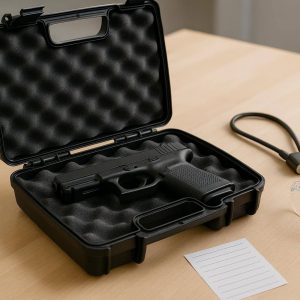
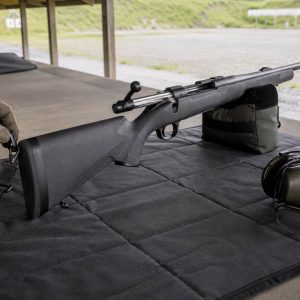
Storage is another category that will vary depending on where the gun is stored. Since Florida is hot and humid for most of the year, cases that seem to be dry in the air conditioned house can suddenly pick up moisture in a hot vehicle, in a covered shooting area or in a cool home. The best storage case is one that you match to your gun's usage, with a desiccant to control moisture, an inspection routine and a storage location. And, surprisingly, it isn't the most expensive case on the market. A few simple checks will keep surface rust at bay, prevent any damage to the firearm's finish and prevent the discovery that your expensive case is actually holding moist air against your firearm all the time.
Why a closed case can hold moisture
Impacts, like dropped firearms, are generally prevented by hard cases, soft gun bags and shooting range bags. However, these cases do not in itself store firearms in dry environments. In addition to the entry of warm, moist air, stored cases must also be watched for sealed insides with damp foam areas, which can be damaged by contact with a damp towel or cleaning cloth, for example.
Even more important is the fact that most shooters close their range cases immediately after returning home from a shoot. And it is exactly in this phase of the storage process that the worst damage can occur. For even though a firearm may appear to be completely dry, there can still be lots of moisture locked between the metal surfaces and the case's interior, in seams, around sights, in trigger guard areas and other similar spots.
A case should protect the firearm without becoming a sealed hiding place for moisture. That distinction guides the buying decision.
Match the case to transport, not long-term storage
For general transport of your firearms to and from the range a hard case is generally better for protecting your firearm from impact, dust and other forms of damage. And if you're going to be moving your firearm around in a vehicle then a hard case that can be locked and will withstand being in a wet vehicle from time to time is probably your best bet.
A soft case is easier to carry than a hard case, dries faster, and is better suited for short trips and casual use. However, soft cases are easily crushed, are prone to abrasions, and are easily compromised by poor packing. The case should be inspected as soon as possible after return from a trip, to detect any sign of moisture having penetrated the bag.
Hard-sided cases are intended for long-term storage as much as they are for transport. These cases are typically opened and closed for transport between locations, and then stored in a closet, basement or attic. A soft-sided case is often best for short trips to the range and is typically dried out as soon as possible after returning from the range. The gear that was used at the range is removed from the case and either hung up to dry or placed in a well-ventilated area until it is completely dry before being placed back in the soft-sided range case.
Use silica gel as a supplement, not a guarantee
Silica gel packets are used as desiccants in most indoor environments to keep moisture down. Same principle applies to storing a firearm and accessorize in a case. If you store a firearm and accessorize in a case that contains a sufficient amount of silica gel, that will keep the case relatively dry. Note that once a silica gel packet has absorbed moisture it will no longer be of any value to you as a desiccant. Make sure to read and follow the manufacturer's instructions for the silica gel packets for recharging or replacement as required.
Loose packets of silica gel are to be avoided as they can be easily lost within the container or even get into the méekest of parts and cause damage. Bags or reusable containers of silica gel are far better as you can place them in a position that won't scratch your firearm's finish, won't get in the way of closing the case or open it, and will be easily seen to be requiring refreshing.
It's important to remember that a firearm that's been exposed to rain must be completely dried before storage using silica gel. Any remaining moisture within a firearm can cause rust or corrosion, which can be irreparable. Allow time for the desiccant to work once a firearm has been stored with the humid container open for a short period of time.
Build a short post-range inspection
Be able to dry the gun before storing it away in a case. Unload it and then check for any sign of moisture on the exterior of the gun and any parts that may be easily overlooked such as beneath the grip or stock, around the sights or controls and along any seams or protective finishes.
This means you must remove the firearm from the case at home and inspect the interior of the case, the corners, the hinges and pockets, for signs of moisture, coolness to touch or musty odors or staining. If the case's interior liner feels cool and damp to touch or develops musty odors or staining then it must be allowed to completely dry before it can be used for storage of your firearm.
Always clean and lubricate the firearm as required by the manufacturer and always refer to instructions for cleaning and lubricating the firearm, as excess oil can soon collect dust and may soon find its way into other parts of the gun. Also, in some cases, excessive lubrication can cause an awful lot of discomfort when handling a firearm.
Choose storage conditions that reduce surprises
This post deals with gun case storage as opposed to gun case transport for range trips. The best location for long-term storage of a gun and case is a secure, dry location that is kept at a constant temperature and humidity. Do not store a gun and case in a garage, in a shed in your back yard, in the trunk of a car or in a similar unconditioned location. Instead, store the gun and case in an inside location of your home.
Do not store a firearm covered in clothes, cleaning patches, etc. that have come into contact with the firearm at the range. Keep a record of inspections to a case stored for long periods of time. Note any changes in humidity indicator packets in a stored container over time to see if there are any patterns.
Be aware of the changing laws regarding the storage and transport of guns and firearms in the area where you live. Also be sure to check the manufacturers' instructions for both the firearms and the case.
Common mistakes that defeat rust prevention
The case can become a source of rust as easily as it is a means of protecting against it by sealing in damp air rather than keeping out dust. Packs of silica gel, old or new, must be replaced or recharged frequently and should never be stored with a wet firearm.
Just as important is to remember that a soft case is a soft case. Be aware that the liner to a soft case will likely to take a lot longer to dry than you expect. Also, many foam padded cases have hidden areas of moisture in the pads that can come into contact with your firearm. Also, do not store your firearms in your hot vehicle for extended periods of time. Also, do not pack up your firearms immediately after a range trip and then put them away in storage.
Insist that the case become part of your routine inspections. Let it dry completely before closing it up again. Replace or recharge desiccant as needed. Do your best to select the correct means to transport your firearm for the trip that you are planning. Minor changes to your storage of the firearm and case usually provide better results than one very expensive item.